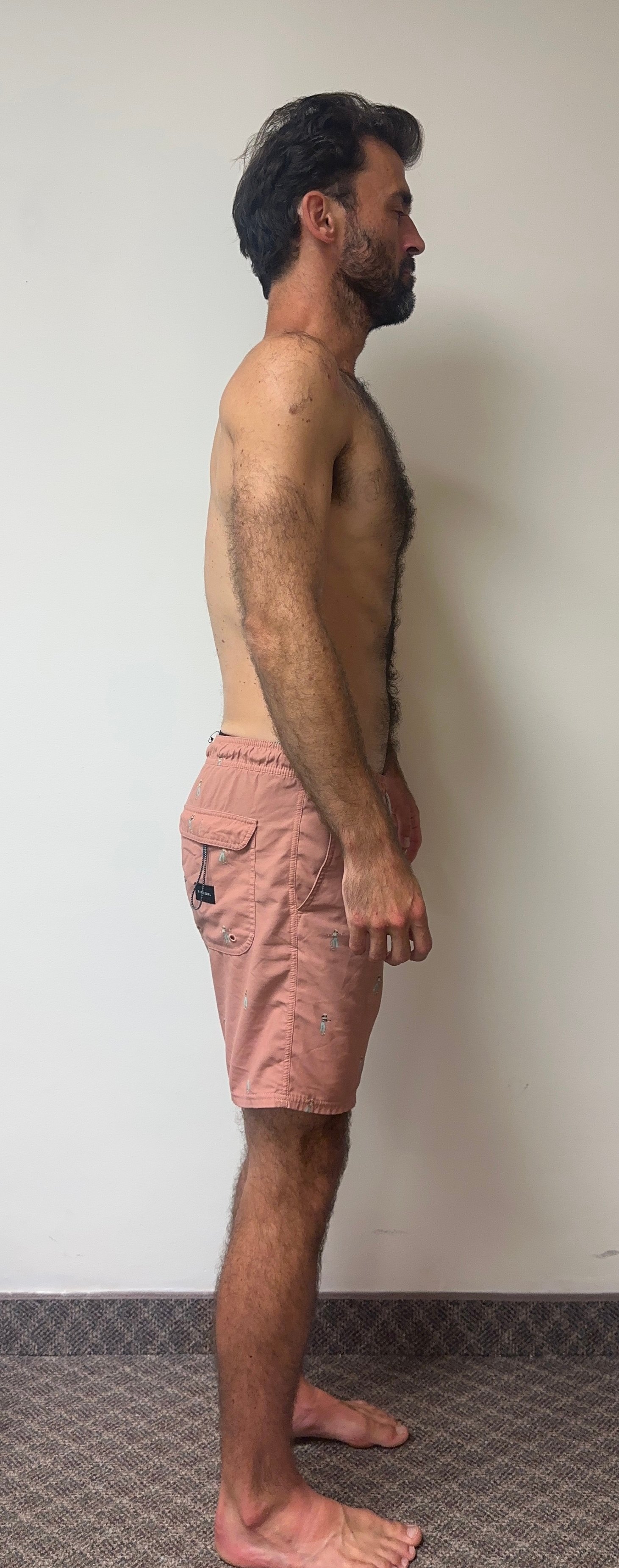
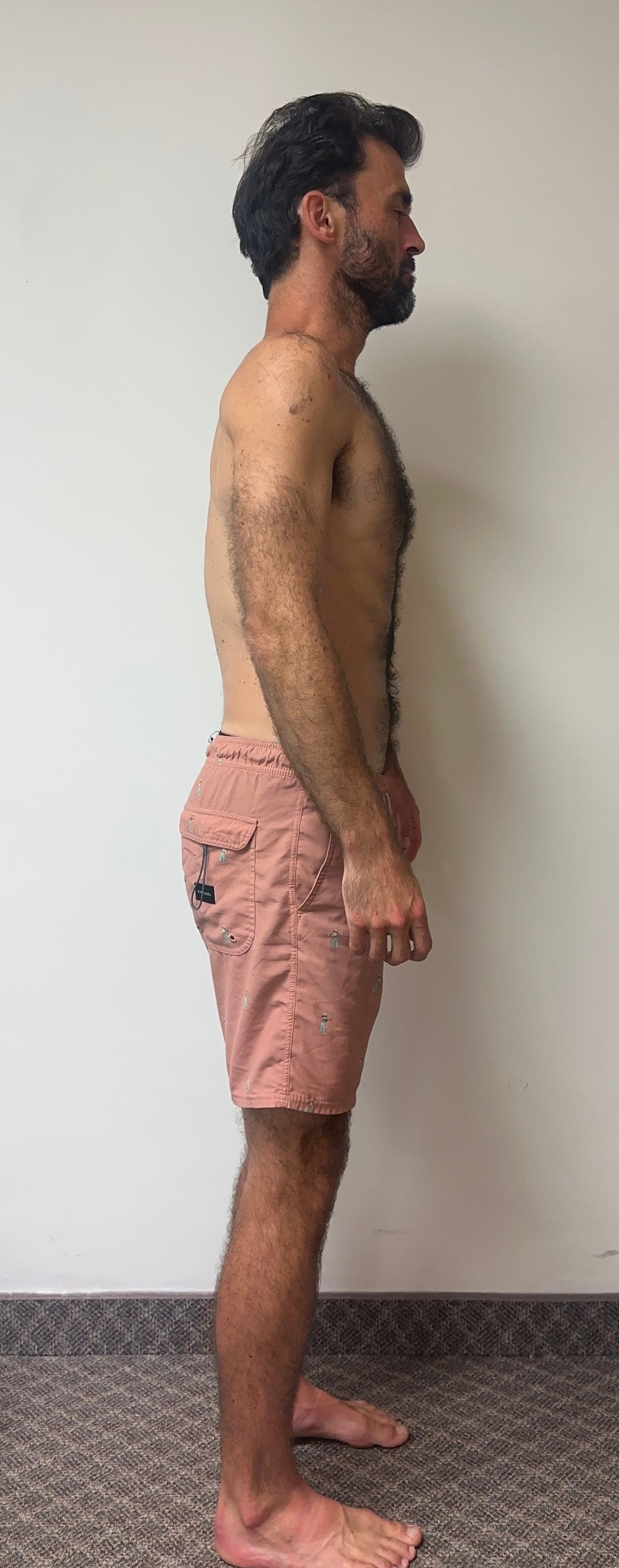
The causes of pain at a physical level can be multifaceted and complex-- I want to discuss pain at the level of physical structure. From a biomechanical perspective, I try to understand how someone's body distributes pressure and tension throughout their entire system as they stand and move through space. This can take on many unique forms, though our seated culture has some regular patterns that take place. Many are struggling with back and other joint pain-- correcting your overall movement through good biomechanical exercise can alleviate these pains by changing the way your entire body distributes tension and pressure as you take steps to get from point a to b. The seemingly simple act of walking can be a process where the body sustains energy or one that is painful and leaks energy.
The repeated patterns we subject our body to result in structural adaptations in our myofascial web (you might think of it as your myofascial unitard). If you sit for 8 hours a day in front of a computer under a lot under stress, your pelvis may slowly wire itself forward as the front of your legs and hips may begin to be restricted in this constantly flexed state. This can then limit the effectiveness of the body's ability to properly rotate and thus move through space. Maybe your neck tenses a lot of the day, and your breathing is pretty restricted. If you start to look honestly at how your body likes to stand, this may help you on your journey to better fitness.
Take 4 photos of yourself, 1 in each direction. Then simply look for a bit. Is one side more compressed? Do you appear rotated to one leg? Are your hips shifted forward relative to your rib cage? If this posture were to begin moving through space, what parts of the body would be driving you? what parts might not be doing enough?
If major issues are there, it is going to be difficult to move in a dynamic way in your life. You don't have to be an elite athlete, but being able to walk, jog, or run with confidence can bring a great steadiness to us. With Functional Patterns training, we teach people a scalable method of training that focuses first on the details of these postural imbalances. Addressing the structure with precision first allows the load and challenge to come later, as this allows us to use load in a regenerative way, as opposed to just pushing through reps on top of existing imbalances.